Subscribe For Updates, Not Spam.
Thoughful essays, reflections, and stories—straight to your inbox.
There was a time when I used those five words with the considerable weight they carried.
The press identity card was not very different from the red beacon that once sat atop government cars. It did not merely identify you. It announced that you belonged to an institution that mattered. Doors opened differently. Questions were tolerated a little longer. And, occasionally, authority exercised a little more restraint.
Watching videos from the protests surrounding the NEET paper leak, I was reminded of that old privilege.
Among the protesters, police personnel and raised voices were people holding smartphones and cameras, recording what was happening around them. A few identified themselves as being from the press—most were independent journalists or content creators whose claim to the title rested less on an organization employing them and more on the audience following them.
And yet, the words seemed to matter.
Not getting hit by a lathi during a protest is a privilege too!
But something else about those images stayed with me.
Who exactly is the press anymore?
More than five centuries ago, Johannes Gutenberg helped change the answer to a different but related question: Who gets access to information?
Before movable-type printing transformed the world, reproducing books was slow, expensive and labor-intensive. Written knowledge was consequently scarce and concentrated. Gutenberg did not invent knowledge. He changed the economics of distributing it.
Once books could be reproduced in large numbers, ideas could travel farther and faster. Knowledge became progressively harder to confine within institutions and privileged circles. More people could encounter an idea, interpret it, disagree with it and pass it on.
The printing press was a technological invention. Its consequences were social.
Information had begun, however imperfectly, to democratize.
Centuries later, newspapers, radio and television dramatically expanded that reach. But they also created new gatekeepers.
Printing required capital. Broadcasting required infrastructure and licenses. Newsrooms required organizations. Editors decided what deserved space. Governments could control broadcasters; proprietors could influence newspapers; commercial interests could determine which stories received attention and which quietly disappeared.
The number of people receiving information had multiplied enormously. The number capable of distributing it had not.
The smartphone, internet and social media changed that equation.
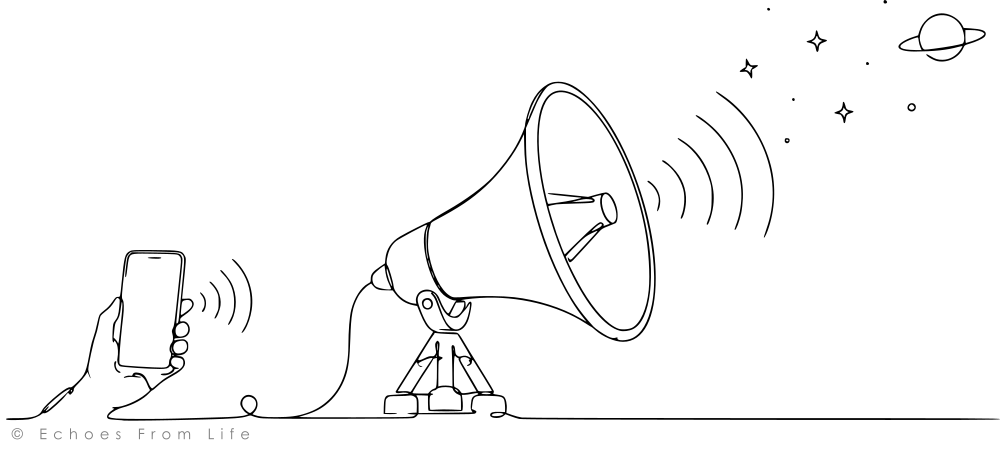
A person standing on a street can record an event, add commentary and distribute it to thousands—or millions—within minutes. There is no printing press to purchase. No broadcasting license to obtain. No editor whose approval is necessary.
There is a camera, an internet connection and an account.
That is about it.
Platforms such as Instagram, X and TikTok separated the ability to publish from the ownership of a publishing institution.
Gutenberg made reproduction cheaper.
The internet made distribution cheaper.
Social media made publication available to almost everyone.
Each technological shift widened the circle.
And perhaps that is why the NEET protest videos interested me beyond the protest itself.
Traditional media covered the agitation. But so did independent journalists, YouTubers, activists, students and ordinary people standing in the crowd. Their cameras did not necessarily point in the same direction. Their interpretation did not necessarily match that of television studios.
That changes the relationship between institutions, citizens and information.
A government may influence a broadcaster. A business may influence a newspaper. An editor may decide that a story does not deserve prominence. But controlling the narrative becomes considerably harder when a hundred people are carrying cameras.
The story is no longer contained inside the newsroom.
It is out there on the streets!
This does not automatically make what emerges from the street accurate, fair or unbiased. Technology has democratised the ability to publish; it has not democratised wisdom, judgement or truth. Misinformation, manipulation and manufactured outrage are consequences of that distinction.
But the achievement deserves to be recognised before its imperfections consume the discussion.
Democracy is more than the ballot box. The quality of the choice we make there depends partly on what happens between elections.
What information reaches us?
Who decides which questions are worth asking?
Whose version of an event do we hear?
And, perhaps most importantly, can somebody outside established institutions challenge that version?
A citizen cannot meaningfully exercise judgement without access to competing information and perspectives. Democracy therefore depends not merely on the right to vote, but on the ability to know, question, compare and form an opinion.
The press has to perform that function.
Technology has now expanded who can participate in performing it.
Perhaps the fourth pillar has not changed as much as its boundaries have.
Which brings me back to those words. “I am from the press.” Once, they meant that a newspaper, magazine or television channel stood behind the person saying them. Today, the person may be standing alone with a smartphone.
That difference is enormous.
For centuries, technology has progressively reduced the cost of carrying an idea from one human being to another—from movable type, to newspapers, radio, television, the internet and finally the device in our hands.
Every reduction in that cost weakened somebody’s monopoly over information.
The printing press gave more people access to the written word.
The internet gave more people access to information.
Social media gave more people the ability to distribute it.
And somewhere in a crowd protesting NEET paper leak, a person lifts a smartphone, points its camera towards authority and says: “I am from the press.”
Perhaps the real revolution is that they no longer need anyone’s permission to say it.