The Rain, the Gutter, and the Five Little Souls
It was the kind of monsoon that wrote poetry on rooftops and carved rivers out of pavements. The sky often wore a thick shawl of grey and wept for hours. And yet, amidst the deluge, life was quietly beginning—five tiny lives, born under a leaking sky, in a city that had no time to pause for newborns.
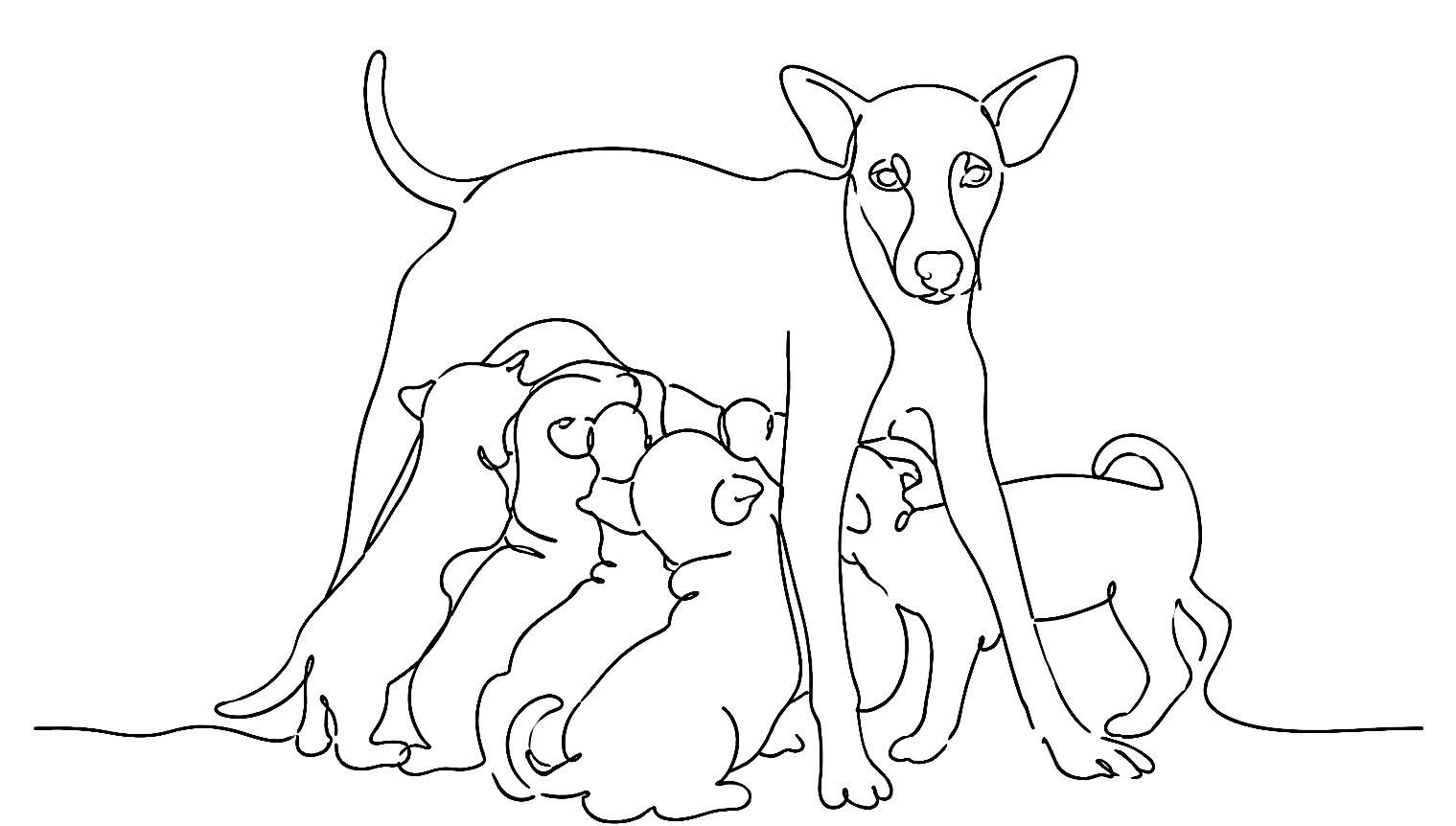
A street dog, fully black and weary-eyed, chose the corner of a dry gutter to give birth to her litter. The gutter was narrow and long, almost like a forgotten tunnel — 40 feet in length, a few feet wide, barely tall enough for a child to crouch inside. But it was dry, hidden, and safer than the chaos of the road. She had no choice. The streets had never promised her comfort.
Her babies came into the world with eyes shut, ears closed, and hearts fragile. The mother lay close, her body shielding them from the biting wind, but not from the rain. When it poured, she’d run to the dry pavement outside a nearby dry-cleaning shop, where the overhanging roof offered a patch of mercy. And each time, she’d leave her babies behind—perhaps praying to whatever dog gods there are, that the water would not rise.
But the rain had its own will. One night, it fell harder than usual. The sky seemed angry. Water slithered into the gutter, creeping like a predator. The puppies squealed. The mother barked helplessly from the outside.
Nature has its angels.
Two boys — one just nine, the other twelve — had been watching. One a son of the person who worked at the dry-cleaning shop, and other his neighbourhood friend. Life had taught them to grow up too soon, but not soon enough to kill their compassion.
As the water rose in the gutter, they jumped into action. Without hesitation, they crawled into the darkness, knees scraping against wet stone, palms pushing against slime and sharp edges. They reached the shivering balls of fur and pulled them out one by one. Five lives, carried in bare hands, soaked and scared, were brought to a new shelter — under a wooden table outside the shop that was under the over-hanging roof.
That night, humanity came wrapped in the grime of street work and the valour of childhood.
The mother now knew she had allies. A few neighbours, moved by the drama of the rescue, began feeding her glucose biscuits. But the biscuits barely helped. She nibbled and lost interest.
That’s when my wife stepped in.
We had dogs of our own — three loyal companions — and experience had taught her the subtleties of canine care. She began feeding the street mother the same food as our own dogs: packaged dog food, and a wholesome mix of rice and diluted milk. Vets might have their reservations about milk, but dogs, like people, have their comforts. That warm porridge became her solace, her strength.
Each morning, afternoon, and night, my wife would walk out with a bowl. The dog, once wary and street-smart, began to wait at the gate. A relationship, wordless and mutual, was born. The neighbourhood took notice. Some whispered in amusement, others with admiration. Soon, she earned a new name: Dog Mother.
Two weeks passed. The puppies opened their eyes.
Their fur had fluffed out — three were snowy white, two a soft beige. My wife named the boys Ramu, Shamu, and Bhimu; the girls, Sita and Geetha. Bhimu was the biggest — a name borrowed from mythology, where Bhima stood for strength.
The pups were back in the gutter; the floor now covered with sheets of paper, cloths, and tarpaulin to keep them warm and away from any wetness. A wooden plank was placed across the gutter to keep them safe from straying.
By the third week, the puppies began making noise — soft yelps that sounded like music. My wife and daughter started spending more time with them, lifting them gently and walking them to a nearby empty site. Three times a day, like clockwork, the sessions began: morning, afternoon, and evening. The puppies frolicked like children who knew nothing of sorrow. They learned to walk. They learned to trust. They learned to look up at humans with gleaming eyes.
And they remembered.
Each time my wife’s voice floated down the lane, they’d cry in anticipation, tiny barks of joy echoing off the walls. They had learned the sound of love.
By the fourth week, the mother began to wean them. Nature does not linger. So, we added more to their meals — a diluted milk that gave them strength. They began to expect the hands that fed them, the voices that called them, the arms that lifted them into a world far better than the one they were born into.
I stood mostly on the sidelines — a silent witness, a helper when needed. And yet, I felt more than I showed.
Week five came. The puppies had become miniature clouds of joy. Children from the neighbourhood flocked in the evenings — not to dominate, not to disturb, but to witness. These were creatures younger than them, softer than them, and they taught the children gentleness.
But joy never stays untested.
Week six brought strangers.
Three people approached with warm eyes and ready arms. They wanted to take two puppies. Of course, nobody owned the pups. They were street-born. But care has its own authority, and we felt a moral responsibility — not of possession, but of protection.
We asked questions. Others who had helped along the way were consulted. After discussion, two of the male puppies — Ramu and Shamu — were chosen.
Bhimu, the bulkiest and our favourite, was not up for adoption. Not yet.
I stood on the balcony as the two puppies were picked up. I saw their tails wagging and their bodies wriggling in curiosity. I saw the mother pacing in confusion. And I felt something crack within me.
It was a quiet heartbreak. Not loud. Not cinematic. But deep. A kind of ache that comes not from loss, but from uncertainty.
- Would they be fed?
- Would they be safe?
- Would they be loved?
I didn’t know. And in that helplessness, I turned — as many of us do — toward something beyond myself. I closed my eyes and whispered a silent prayer. Not for a miracle. Just for kindness.
Hope is a fragile thing. It survives not because the world is kind, but because we want it to be.
As a man, especially as a father, I often keep emotions behind a curtain. But that day, I felt exposed. My eyes watered. My hands trembled. Because when you have done all you can — fed, walked, protected, loved — and still the world moves on in unpredictable ways, all you’re left with is a simple, sincere plea: “Let them be loved. Let them be safe.”
We turn to God, not because we lack reason, but because we lack control. When desire and love meet helplessness, prayer is born.
And in that moment, I understood something profound.
The universe, for all its chaos, notices when love is given freely — when two street kids crawl through darkness to save a life, when a woman feeds a mother dog without expectation, when neighbours pause to offer biscuits, and when children learn compassion by playing with furred bundles of joy.
Creation, perhaps, is not shaped by power or intellect. It is shaped by desire — the desire to love, to nurture, to protect.
It is not fate or chance that moves the universe—it is us. Our choices, our desires, our acts, no matter how small, leave ripples. We shape the world not through grand gestures, but through the simple will to care. Love and kindness may not command the storms, but they give us the strength to shelter others from the rain. And maybe that is how the universe is truly built—one tender act at a time.