A Pageant of Power
For decades, the United States carried itself as the center of the global order, with presidents arriving in foreign capitals as representatives of the world’s sole superpower. Yet, during Donald Trump’s visit to China, the symbolism seemed strikingly different.
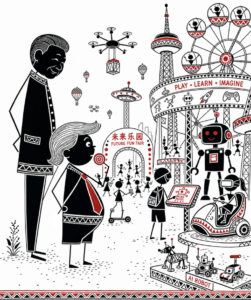
The image was hard to miss: a boastful American president, known for his swagger and claims of making America great again, appeared less like a commanding statesman and more like a wide-eyed child captivated by a spectacle. China did not merely host Trump; it staged an exhibition of power. The grand architecture, flawless choreography, technological prowess, and carefully curated displays were not meant for diplomacy alone. They were designed as a message.
The audience was not Trump. The audience was the world.
Every procession, every ceremonial gesture, every display of modernity served a singular purpose—to announce that China no longer saw itself as a rising power seeking recognition. It saw itself as an equal. A nation ready to stand shoulder to shoulder with the United States and demand acknowledgement on its own terms.
Trump, who rarely missed an opportunity to project strength, found himself playing an unexpected role. The showman became a spectator. As China unveiled its vision, confidence, and civilizational continuity, the American president seemed mesmerized by the grandeur unfolding before him. The contrast was revealing. The leader who often portrayed others as petitioners appeared captivated by a performance carefully orchestrated by Beijing.
That was China’s real victory. Not a trade agreement. Not a diplomatic concession. Not even a favorable headline.
The victory lay in the optics.